RELATIONAL TRAUMA
Trust in God, but tie your camel.
I hope you’re doing well today. SUMMARY The ancient wisdom ‘trust in God, but tie your camel’ speaks directly to the driven woman’s dual challenge: learning to hold genuine faith and surrender alongside real, practical action.
I hope you’re doing well today.
SUMMARY
The ancient wisdom ‘trust in God, but tie your camel’ speaks directly to the driven woman’s dual challenge: learning to hold genuine faith and surrender alongside real, practical action. This post explores how that balance plays out in modern life, and why both halves are necessary for sustainable wellbeing.
Now I know you heard from me just a few short days ago when I posted a little bonus blog article with suggestions about how to cope with Thanksgiving, post-election 2016.
The article (and topic!) seems to have struck a chord. Indeed, Forbes picked it up and shared some of my advice (along with input from other mental health experts) in a recent article of theirs.
So I certainly hope the bonus blog post felt helpful to you, too, and that you were able to have a wonderful Thanksgiving holiday with all who gathered around your holiday table no matter how you guys voted.
Now I have to confess: the election results are still on my mind (as I imagine they may be on your mind, too), and in the the past few weeks I’ve caught myself saying this one slightly obscure but beloved phrase over and over again to myself and to others as we process our varying reactions and responses to President-elect Trump:
“Trust in God, but tie your camel.”
RELATIONAL TRAUMA
Relational trauma refers to psychological injury that occurs within the context of important relationships, particularly those with primary caregivers during childhood. Unlike single-incident trauma, relational trauma involves repeated experiences of emotional neglect, inconsistency, manipulation, or abuse within bonds where safety and trust should have been foundational.
This saying, as relayed by the scholar Al-Tirmidhi, is an ancient Arab phrase attributed to the prophet Mohammed who, when one day he saw a Bedouin leaving his camel without tethering it, questioned him as to why he was doing this. The Bedouin replied that he was placing his trust in Allah and had no need to tie the camel. The prophet Mohammed then replied, “Tie your camel and place your trust in Allah.”
While I cannot remember where and when I first heard this phrase, I know loved it immediately and tucked it away in my heart as one of my most guiding life principles, calling upon it again and again like a sort of touchstone in my pocket.
“Trust in God, but tie your camel.”
TAKE THE QUIZ
What’s driving your relational patterns?
A 3-minute assessment to identify the core wound beneath your relationship struggles.
“The wound is the place where the Light enters you.”
RUMI
Why do I love this phrase so much? Well, it’s not because I identity as religious. Nor do I own an actual camel. (Wouldn’t that be something to see in Berkeley, though?!)
No, I love this phrase because it’s one that I, as a heavily action-oriented person, can well and truly get behind: Do the legwork and then let go; Say a prayer but move your feet; Eyes on the stars but feet in the mud; Do your best and then leave the rest to God (or Spirit, Source, the Universe, Goddess, etc.).
Free Guide
A Reason to Keep Going — For Anyone Who Needs One Right Now
25 pages of somatic tools, cognitive anchors, and 40 grounded reasons to stay — written by a therapist with 15,000+ clinical hours.
“Trust in God, but tie your camel.”
I find this phrase to be quite empowering but also very calming.
The phrase invites me to take stock of what it is I have control over, and to take action there if needed and wanted, and then to sit back, and trust the process.
This phrase helps me navigate the tension I can sometimes experience between feeling helpless and also all-powerful over the events in my life. (Neither of which is true and both of which can make me feel very ungrounded.)
I love this phrase because it invites me to notice how I can balance both action and allowing, no matter what I’m facing.
“Trust in God, but tie your camel.”
I truly think this phrase could be helpful to you, too, no matter what you’re facing these days.
Balancing taking action and letting go in our lives is something we’re all often called on to do. Yet many of us respond in all action and no faith. Or we rely too heavily on faith when it might behoove us to take a bit more action in our lives.
So I want to invite you to consider how and where this phrase could be applied to your life right now to help you better navigate the tension of acting and allowing.
“Trust in God, but tie your camel.”
What proverbial camels of yours need to be tied? Or where in your life do you need to stop the metaphorical tying and double knotting the ropes and just let go?
- With processing the election results, do you need or want to get more actionable on anything this raised for you? Or is it time to step back a bit, and to let go and place your faith in the unfolding outcome in something bigger than yourself?
- When it comes to your love relationship (or the seeking and creating of this), is there any action you need and want to take that’s in your control that would help you feel more empowered and fulfilled? Or do you need to stop gripping a particular outcome so tightly and instead relax a bit more? Do you need to trust that all will happen when it’s supposed to?
- In your career planning and navigation, how well are you proverbially “tying your camel”? Or are you allowing things to happen to you more than taking action on them?
- With your friend and family relationships, is there any action you can take to feel closer and more connected? Or have you done all you can? Is your work instead to accept and allow the unfolding of whatever comes next?
- Does your health and well-being need more action taken? Or is your growth edge to stop controlling quite so much and to relax and unfold more?
“Trust in God, but tie your camel.”
I invite you to mentally scan the landscape of your life. Be curious about where and how this phrase may be particularly applicable for you right now.
And, of course, often there can be anxiety associated with both taking action and also in tolerating the unknown when we let go. So please be gentle with yourself no matter what and how things are unfolding in your life right now.
There is no right or wrong way to take action or practice faith in our lives. Both are constant practices, questions we’re meant to live, not prescriptions for this article or any other.
“Trust in God, but tie your camel.”
So, as we slide into the closing of the year when the days are darkest and yet the time seems to disappear, no matter what’s going on for you — election distress, family conflict, romantic confusion, health challenges, financial strain, career uncertainty — see if you can keep this phrase like a mental touchstone in your own pocket. Return to it as often as you need to to comfort, recalibrate, and clarify.
Here’s to healing relational trauma and creating thriving lives on solid foundations.
Warmly,
Annie
What does it mean to practice showing up anyway?
|
Free Quiz What’s Running Your Life?The invisible patterns you can’t outwork… |
Your LinkedIn profile tells one story. Your 3 AM thoughts tell another. This quiz reveals the childhood patterns keeping you running — and why enough is never enough. |
Frequently Asked Questions
DISCLAIMER: The content of this post is for psychoeducational and informational purposes only and does not constitute therapy, clinical advice, or a therapist-client relationship. For full details, please read our Medical Disclaimer. If you are in crisis, please call or text 988 (Suicide & Crisis Lifeline) or text HOME to 741741 (Crisis Text Line).
You deserve a life that feels as good as it looks. Let’s work on that together.
References
- Al-Tirmidhi (9th century CE (compiled)). Jami` at-Tirmidhi (Hadith Collection). Islamic Hadith Literature.
- Park, C. L. (2010). Making sense of the meaning literature: An integrative review of meaning making and its effects on adjustment to stressful life events. Psychological Bulletin.
- Schore, A. N. (2003). Affect Dysregulation and Disorders of the Self. Norton & Company.
- Koenig, H. G. (2012). Religion, spirituality, and health: The research and clinical implications. ISRN Psychiatry.
- Bowlby, J. (1988). A Secure Base: Parent-Child Attachment and Healthy Human Development. Basic Books.
This ancient proverb, attributed to the Prophet Mohammed via the scholar Al-Tirmidhi, contains a remarkably complete philosophy for navigating uncertainty — which is to say, for navigating life. The story behind it is simple: a Bedouin arrived at a gathering and left his camel untethered, saying he was trusting in Allah to protect it. Mohammed advised him to tie his camel first, and then trust in Allah. In six words, this encapsulates a “both/and” wisdom that our culture often flattens into an “either/or”: either you work hard and control outcomes, or you surrender and trust a higher power. The proverb refuses that false choice. It says: do what is genuinely, practically yours to do — the preparation, the effort, the showing up, the concrete responsible action. And then, having done that, genuinely release the outcome to forces larger than yourself — whether you name those forces God, the universe, spirit, fate, or simply the irreducible uncertainty of life. In modern life, this applies everywhere: to how you prepare for and then accept the results of a job interview; to how you show up fully in a relationship and then let go of trying to control whether your partner is happy; to how you do your best clinical work and then release the outcome for your clients. The liberation of this phrase is in its permission: you are not required to control everything. You are only required to do your part, and then trust.
If you’re a high-achiever who finds surrender nearly impossible even when you’ve prepared thoroughly, done the work, and shown up fully — the difficulty is almost certainly not a character flaw or a spiritual deficiency. It is almost always the echo of an early relational environment. When childhood was unpredictable — when the adults in your world were unreliable, volatile, or unsafe — your nervous system learned a very logical lesson: vigilance is survival. Constant scanning for what might go wrong, constant preparation for the worst-case scenario, constant effortful management of circumstances and relationships was the strategy that kept you safe (or at least gave you the sense that you had some agency in an uncontrollable situation). That strategy absolutely served you. It may even have built remarkable capabilities: your discipline, your thoroughness, your ability to anticipate problems before they happen. But it doesn’t turn off automatically when you become an adult in a safer world. Hypervigilance and the compulsive need to control outcomes follow you into your adult life, into your career, into your relationships, and into your spiritual practice — and “just trust” feels not peaceful but genuinely terrifying, because at a deep level your nervous system believes that letting go of control means catastrophe. Healing this pattern — learning to genuinely release outcomes after you’ve done your part — is often slow, nervous system–level work, and it’s some of the most liberating work I know.
This is the art at the heart of this proverb, and it requires both self-knowledge and a degree of ongoing discernment rather than a fixed formula. A few questions I find useful for navigation: Am I taking actions that are genuinely within my sphere of influence — my own preparation, my own responses, my own decisions — or am I trying to control outcomes and other people’s choices that are ultimately not mine to control? Have I done what I genuinely can do, or am I continuing to exert effort as a way of managing my anxiety rather than because more effort will actually help? Is the “pushing” I’m engaged in energizing me or depleting me? Genuine, aligned effort tends to feel vital even when it’s hard; anxious efforting tends to feel tight, urgent, and exhausting. And perhaps most importantly: is there a quality of gripped desperation in how I’m holding this, or am I acting from a place of genuine groundedness and intention? The camel-tying that this proverb endorses isn’t frantic, exhausting, anxiety-driven activity. It is the clear-eyed, responsible doing of what is genuinely yours to do — and then, with that complete, the conscious act of opening your hands. You will not get this right every time. Neither will I. But the practice of asking the question — “Is this mine to do, or mine to release?” — is itself the spiritual and psychological work.
The beautiful thing about this proverb is that it translates remarkably well across spiritual frameworks — including no spiritual framework at all. The “God” or “Allah” in the proverb can be understood as a placeholder for whatever you believe is beyond your personal control: the collective, emergent outcomes of complex systems; the fundamental uncertainty that underlies all of life; the other people whose choices you cannot determine; time itself and the way it changes things in ways you cannot predict. You don’t need to believe in a personal deity to benefit from the liberating practice of doing what is yours to do and then genuinely releasing the rest. In secular terms, this maps onto psychological concepts like the “circle of control” (distinguishing between what you can and cannot influence), acceptance-based approaches in ACT (Acceptance and Commitment Therapy), and the core insight of Stoic philosophy that our peace of mind depends on our ability to separate our effort from our attachment to specific outcomes. The practice remains the same: be genuinely thorough and responsible in your preparation and your action, and then practice the conscious, repeated choice to release your white-knuckled grip on how it turns out. Not because outcomes don’t matter, but because clinging to outcomes you cannot control costs you an enormous amount of energy and peace — energy and peace you could be investing in the next thing that is genuinely yours to do.
Yes — and in my clinical experience, it is genuinely one of the most practically useful frameworks for the kind of pervasive, ambient anxiety that many of my high-achieving clients carry. The anxiety that underlies health fears, relationship worries, and collective existential dread is often, at its core, about the unbearable reality of uncertainty: that bad things can happen, that we cannot guarantee good outcomes, that our love and effort do not guarantee safety for the people we love. The proverb doesn’t ask you to pretend this uncertainty doesn’t exist. It doesn’t promise that if you trust enough, bad things won’t happen to you. It offers something more honest and ultimately more useful: a way of living with uncertainty that is neither paralyzed by it nor exhausted by trying to eliminate it. In practical terms, for health anxiety: do what is genuinely within your power (regular check-ups, reasonable lifestyle choices, building a good medical team) — tie your camel — and then consciously practice releasing the catastrophic worry that no amount of additional vigilance will actually address. For relationship anxiety: do your genuine work on showing up, communicating, and repairing — and release your partner’s response and your relationship’s ultimate trajectory. For the state of the world: take the actions that are genuinely yours to take — vote, contribute, show up for your community — and then tend to your own wellbeing with the knowledge that you cannot carry it all, and were never meant to.
Further Reading on Relational Trauma
Explore Annie’s clinical writing on relational trauma recovery.
A Reason to Keep Going
25 pages of what I actually say to clients when they are in the dark. Somatic tools, cognitive anchors, and 40 grounded, honest reasons to stay. No platitudes.
What would it mean to finally have the right support?
A complimentary consultation to discuss what you are navigating and whether working together makes sense.
BOOK A COMPLIMENTARY CONSULTATIONAnnie Wright
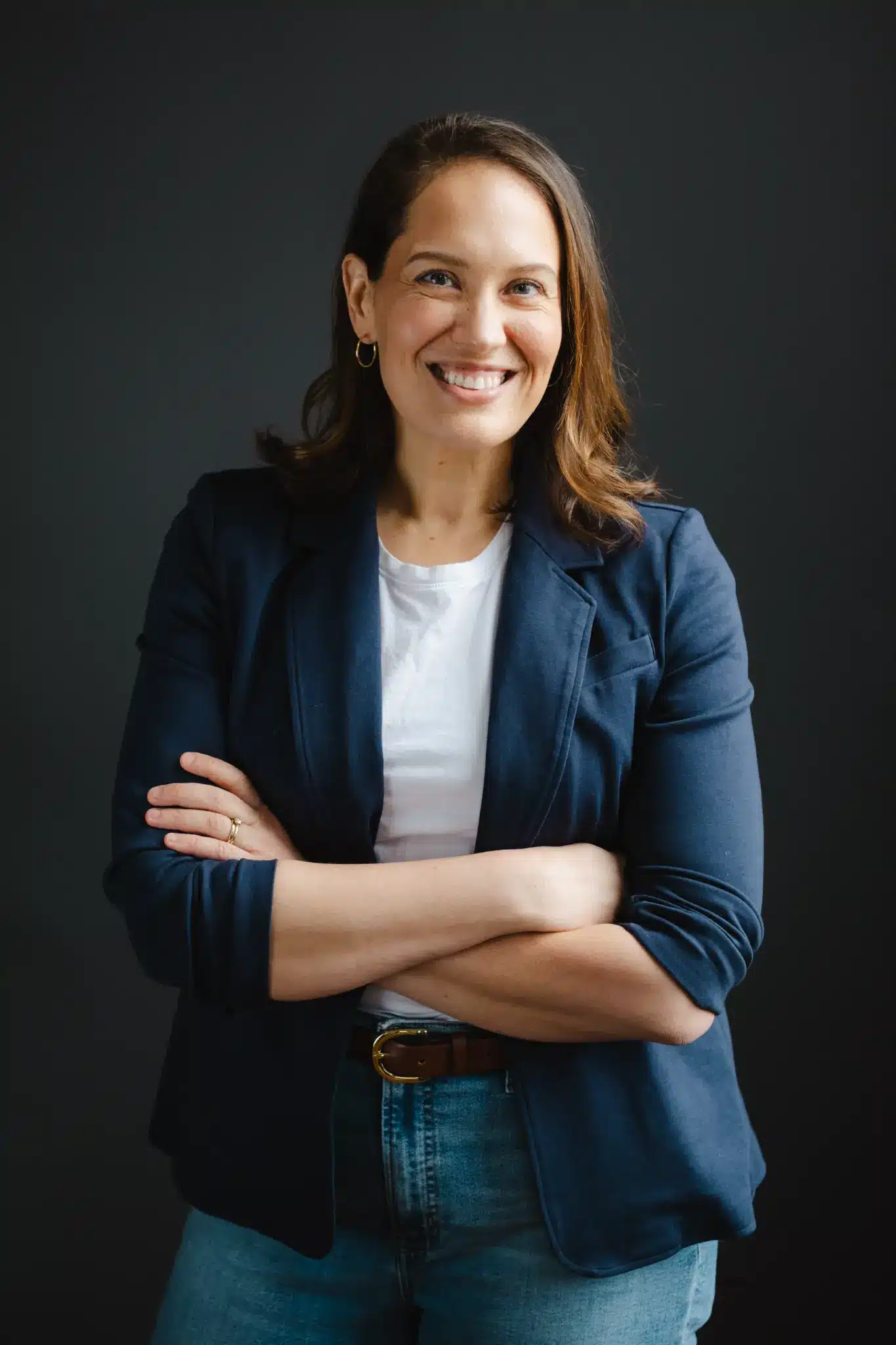
LMFT · 15,000+ Clinical Hours · W.W. Norton Author · Psychology Today ColumnistAnnie Wright is a licensed psychotherapist, relational trauma specialist, and the founder and successfully exited CEO of a large California trauma-informed therapy center. A W.W. Norton published author, she writes the weekly Substack Strong & Stable and her work and expert opinions have appeared in NPR, NBC, Forbes, Business Insider, The Boston Globe, and The Information.
MORE ABOUT ANNIE