

RELATIONSHIPS
A Therapist Shares 8 Things To Look For In A Life Partner.
Choosing a life partner goes far beyond surface-level attraction. A therapist shares 8 qualities — from emotional maturity to conflict repair skills — that create the foundation for a lasting, secure relationship.
Kia ora!
SUMMARY
Choosing a life partner goes far beyond surface-level attraction. A therapist shares 8 qualities — from emotional maturity to conflict repair skills — that create the foundation for a lasting, secure relationship. For driven, ambitious women, attachment patterns and relational history play a significant role in who you feel drawn to, and whether that pull is healthy.
Definition
Secure Attachment: A relational pattern developed in childhood where a person feels safe, valued, and confident in their relationships. Adults with secure attachment can give and receive love openly, tolerate conflict, and maintain a stable sense of self within a partnership.
Which, as I’ve just learned, is the Māori way of saying hello!
I’ve just returned from my wedding and honeymoon in New Zealand, quite honestly one of the most jaw-droppingly beautiful, soul-nourishing places I’ve ever seen in my life.
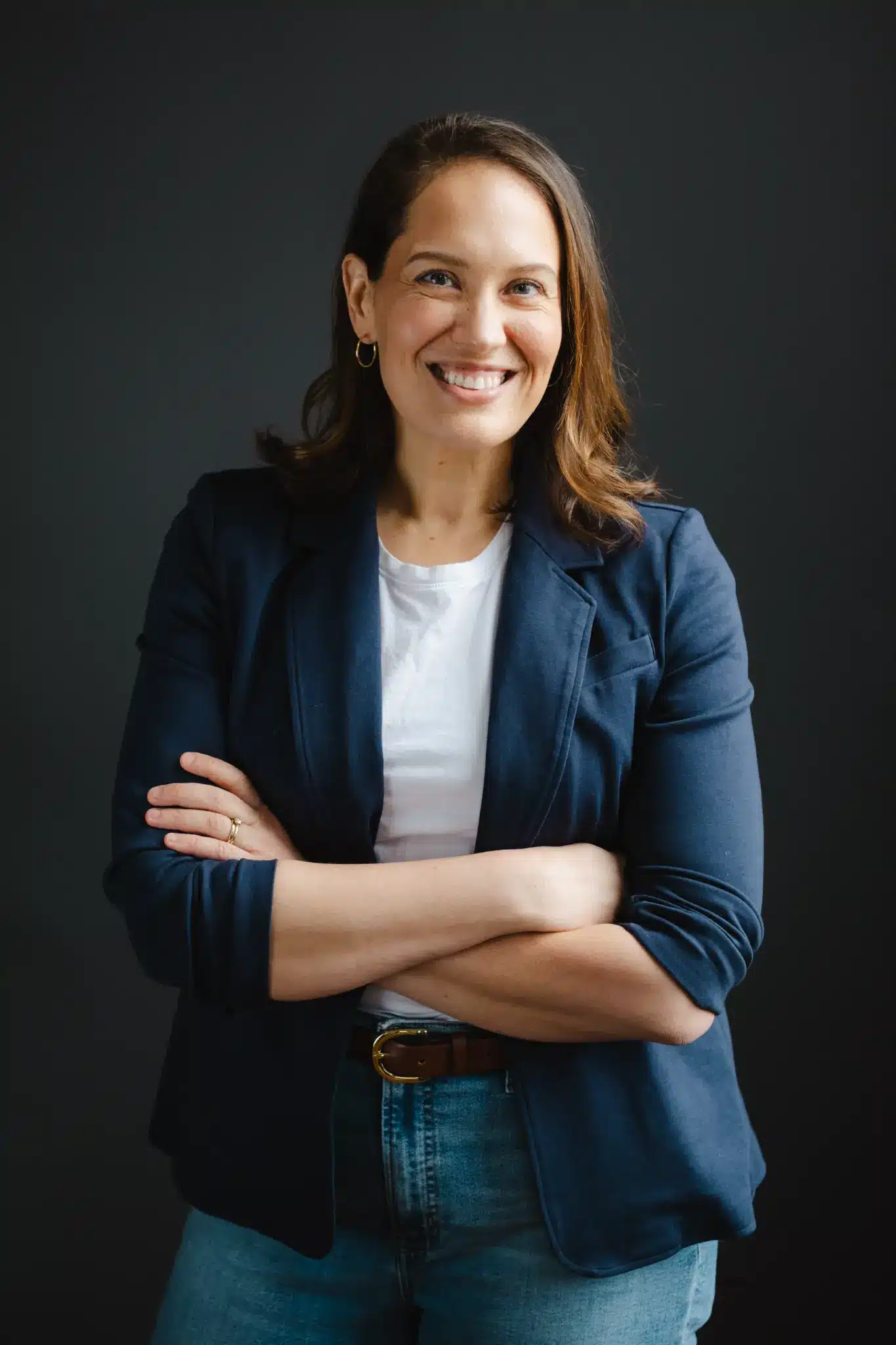
I’ve also just married my best friend and life partner and, because of this, felt moved to write today’s post. (And yes, that picture you see paired with the article is actually one of my wedding photos!)
This post is inspired not only by what I’ve come to believe personally and professionally about love, but also inspired by the many relationship teachers and mentors I’ve learned from over the years.
Today’s blog post topic? 8 things to look for in a life partner.
Now, of course, this list is totally subjective and not at all complete. It’s simply one person’s perspective on some ingredients that may make for a healthy, sustainable, long-term romantic relationship.
We all have our own individual needs and wants when it comes to choosing a life partner, so consider my list of 8 things simply a catalyst for your own creative thinking about this topic.
And then please leave me a message in the comments below to let me know what else you would add to this list!
A Therapist Shares 8 Things To Look For In A Life Partner.
SECURE ATTACHMENT
Secure attachment is a relational pattern characterized by comfort with intimacy, the ability to trust and depend on others, and a balanced sense of self within relationships. It develops when childhood caregivers are consistently responsive, emotionally attuned, and available, teaching the nervous system that connection is safe.
1. Choose someone for their invisible qualities.
“We are most alive when we find the courage to be vulnerable and to connect.”
— Brené Brown, PhD, LCSW, The Gifts of Imperfection
BRENÉ BROWN
Choose someone for the feelings they evoke in you. For the quality of their character and soul. Not for their looks, their professional accolades, their paycheck.
All of this will fade and change and ebb over the course of time. So focus on what’s more critical: the quality and content of their character, for the radiance of their soul, for how you feel when you’re around them, how they treat you, what you could notice and know about them if you were blind and could not see. Your life partner should be someone you can still choose for their invisible qualities.
2. Look for someone who is growth and learning-oriented.
TAKE THE QUIZ
What’s driving your relational patterns?
A 3-minute assessment to identify the core wound beneath your relationship struggles.
The reality is this: long-term romantic relationship can be HARD. It is also beautiful, inspiring, hilarious and many other wonderful things. But make no mistake; it can be hard, too.
Getting two humans to stay together with all their quirks, preferences, and baggage day-in and day-out, year after year as you grow, evolve, and possibly change as individuals takes work and it takes a willingness to grow and to learn.
Choose a partner who is growth and learning-oriented and who’s willing to do the hard work of growing individually and collectively with you again and again over the lifecycle of your relationship.
3. Choose someone who isn’t afraid of (or at least willing to face) the tough stuff of life.
Over the course of a life together, you will both inevitably age and you will possibly grow ill, lose your loved ones, adjust your lifestyle, experience changes in your body and mind’s abilities, see each other miserable, cranky, and probably throwing up and heartsick more than once.
A partner who is only available to see the happy, shiny stuff of life and who wants to quit the relationship when the tough stuff hits may not be long-term life partner material as life is chock-a-block full of the not-so-shiny stuff.
Find someone you can be yourself around and who you can count on to be there when the tough stuff of life gets dished out.
4. Choose someone with (mostly) similar values and a similar life vision as you.
Sure, it’s a nice bonus if you both enjoy the same hobbies and TV shows, but this isn’t the make-or-break stuff of a relationship. Sharing similar goals and a similar life vision is.
If you want children, value higher education, value frugality, and plan to retire to Guatemala by age 50 (AND you’re dead-set on these plans) then it’s probably best to look for someone with a similar vision and values.
Differences in values and life vision can be worked through, of course, but you set yourself (and your relationship) up for success when you choose a life partner who, at the very least, shares some or most of your key values and goals.
5. Choose someone who is a good forgiver.
Similar to point number two, relationships take a lot of hard work and you will both inevitably mess up, hurt each other, make mistakes, and otherwise generally behave like jerks to each other from time to time.
So choose a life partner who is a good forgiver. Who can accept your apologies after you mess up. Who can move past arguments with you. And who can forgive you for not being your kindest self sometimes.
Because messing up in a relationship is inevitable. It’s the repair, the willingness to forgive and come back together again, that really counts.
6. Choose someone who is a good friend.
If this person were not your lover, would you want them to be your friend?
Do you admire and respect how this person shows up in their other friendships? When the fires of passion ebb down in your relationship, when you’re sick, when you’re recovering from a surgery or ailment, when you’re stuck on a ridiculously long road trip together, can you appreciate the friendship you have with this person?
Sex and romance is a slice of the pie of relationship. Friendship with the other person is, perhaps, an even bigger slice. Pick a partner who makes a good friend.
7. Choose someone who makes you laugh.
Joanne Woodward, actress, philanthropist, and long-time life partner of the late Paul Newman, has a quote I just adore:
“Sexiness wears thin after a while and beauty fades, but to be married to a man who makes you laugh everyday, ah, now that’s a real treat.”
Pick a partner who can help you laugh – at yourself, at them, at the ridiculousness of life, who can crack you up even on your grumpiest morning. Humor makes life feel better and a partner who can make you laugh is a wonderful quality in a lifelong mate.
8. Choose someone who inspires you to be a better person.
Ultimately, choose a partner whose goodness and ways of being in the world inspires you to be better yourself. Choose someone who brings out and strengthens parts of you that you may not have known existed.
Choose someone who you feel makes your world and life feel bigger, richer, and more fulfilling. Not the opposite.
I sincerely hope you enjoyed this list!
Now I’d love to hear from you in the comments below:
Which of these 8 traits did you agree with the most? What else would you add to this list to help someone in their selection of a lifelong mate? What’s a must-have on your list for a lifelong partner?
Leave a message in the comments below so our community of blog readers can benefit from your wisdom.
Here’s to healing relational trauma and creating thriving lives on solid foundations.
Warmly,
Annie
|
Free Quiz What’s Running Your Life?The invisible patterns you can’t outwork… |
Your LinkedIn profile tells one story. Your 3 AM thoughts tell another. This quiz reveals the childhood patterns keeping you running — and why enough is never enough. |
Frequently Asked Questions
DISCLAIMER: The content of this post is for psychoeducational and informational purposes only and does not constitute therapy, clinical advice, or a therapist-client relationship. For full details, please read our Medical Disclaimer. If you are in crisis, please call or text 988 (Suicide & Crisis Lifeline) or text HOME to 741741 (Crisis Text Line).
You deserve a life that feels as good as it looks. Let’s work on that together.
References
- Ainsworth, M. D. S., Blehar, M. C., Waters, E., & Wall, S. (1978). Patterns of attachment: A psychological study of the strange situation. Lawrence Erlbaum. View source
- Mikulincer, M., & Shaver, P. R. (2016). Attachment in adulthood: Structure, dynamics, and change (2nd ed.). Guilford Press. View source
- Gottman, J. M., & Silver, N. (1999). The seven principles for making marriage work. Three Rivers Press. View source
- Johnson, S. M. (2019). The practice of emotionally focused couple therapy: Creating connection (3rd ed.). Routledge. View source
- Bowlby, J. (1988). A secure base: Parent-child attachment and healthy human development. Basic Books. View source
- Sternberg, R. J. (1986). A triangular theory of love. Psychological Review, 93(2), 119–135. View source
- Gottman, J. M., & Levenson, R. W. (2000). The timing of divorce: Predicting when a couple will divorce over a 14-year period. Journal of Marriage and the Family, 62(3), 737–745. View source
Grief is the natural response to any significant loss, not just death. It can include the loss of a relationship, a job, a dream, your health, or even the loss of the childhood you deserved. Grief is a process of adapting to a changed reality, and it’s a normal and necessary part of being human.
Grief is not a neat, sequential process. While models like the ‘stages of grief’ can be helpful frameworks, most people experience grief as a messy, non-linear journey with waves of intense emotion interspersed with periods of relative calm. Unexpected triggers can bring grief rushing back, even long after you thought you’d ‘moved on.’
There is no ‘normal’ timeline for grief. The duration and intensity depend on the nature of the loss, your individual history, and the support available to you. Grief can last months, years, or even a lifetime in different forms. The goal is not to ‘get over’ grief, but to integrate the loss into your life in a way that allows you to continue living fully.
Grief and depression can look similar, but there are key differences. Grief typically involves waves of sadness related to the loss, with periods of positive emotion. Depression involves a more pervasive, persistent low mood that affects all areas of life. Grief can sometimes trigger depression, especially in those with a history of mental health challenges, which is why professional support can be important.
Supporting yourself through grief involves allowing yourself to feel the emotions without judgment, seeking connection with trusted others, engaging in self-care, and being patient with yourself. Avoid the pressure to ‘move on’ before you’re ready. Therapy can provide a safe space to process grief, especially if it feels complicated or overwhelming.
Further Reading on Relational Trauma
Explore Annie’s clinical writing on relational trauma recovery.
A Reason to Keep Going
25 pages of what I actually say to clients when they are in the dark. Somatic tools, cognitive anchors, and 40 grounded, honest reasons to stay. No platitudes.
What would it mean to finally have the right support?
A complimentary consultation to discuss what you are navigating and whether working together makes sense.
BOOK A COMPLIMENTARY CONSULTATIONAnnie Wright
LMFT · 15,000+ Clinical Hours · W.W. Norton Author · Psychology Today ColumnistAnnie Wright is a licensed psychotherapist, relational trauma specialist, and the founder and successfully exited CEO of a large California trauma-informed therapy center. A W.W. Norton published author, she writes the weekly Substack Strong & Stable and her work and expert opinions have appeared in NPR, NBC, Forbes, Business Insider, The Boston Globe, and The Information.
MORE ABOUT ANNIE